

Do Green Spaces Reduce Stress? | Landscape Design by BOLA Phuket
Do Green Views Really Reduce Stress?
- The short answer is yes.
- But the real value lies in understanding why.
- Green spaces are not just visually pleasing—
they have measurable effects on human physiology and psychology.
The Science Behind Green Spaces and Stress Reduction
Research in environmental psychology and neuroscience shows that
exposure to natural environments can:
- Lower cortisol (stress hormone) levels
- Reduce heart rate and blood pressure
Improve mood and mental clarity - One well-known study found that
patients with views of trees recovered faster than those without. This suggests that even passive exposure to greenery can significantly impact well-being.
Why Humans Respond to Nature
Humans evolved in natural environments. Our sensory system is adapted to:
- Organic patterns
- Natural light variation
- Movement found in nature
When we are surrounded by these elements, our nervous system shifts into a more relaxed state.
Visual Connection as a Design Strategy
In landscape architecture, this is translated into “visual connection with nature.”
It is not just about adding plants—
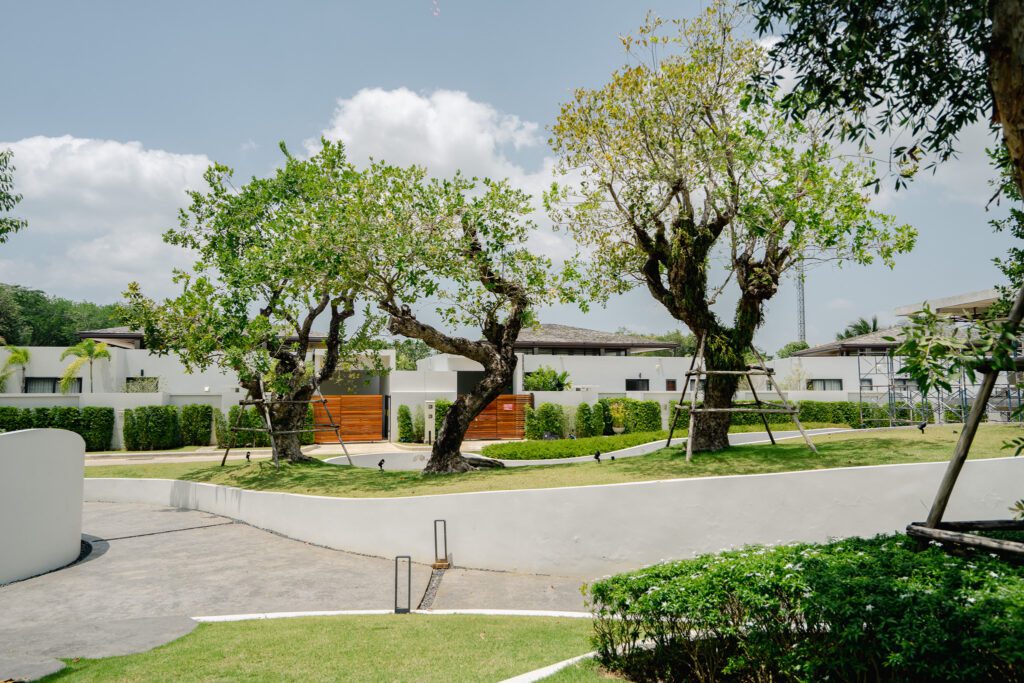
but about designing what people see from key positions:
- Living rooms
- Bedrooms
- Walkways
- Outdoor seating areas
A well-framed green view can transform how a space is experienced.
Micro-Restoration Through Everyday Views
Even short exposure to greenery—
as little as a few minutes—
can help reset mental fatigue.
This is known as “micro-restoration”
In practical terms:
- Looking at trees between tasks
- Sitting near a garden
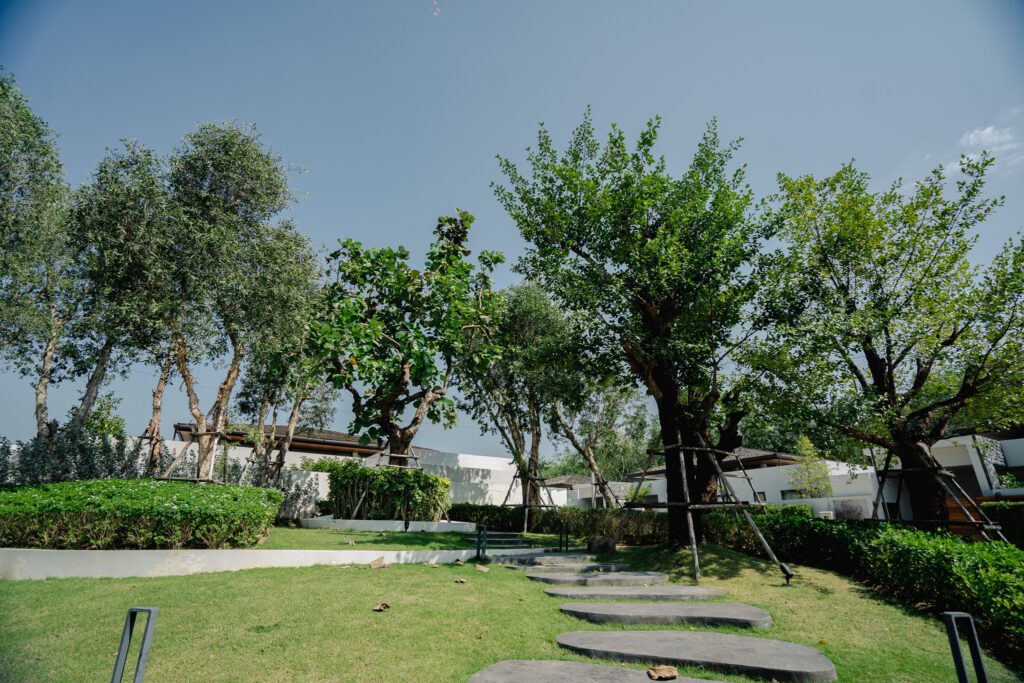
- Walking through shaded landscapes
These small moments accumulate into long-term benefits.
Application in Tropical Landscape Design
In Phuket, green views can be optimized through:
- Layered planting for depth
- Framing views with trees and structures
- Controlling sightlines to reduce visual stress
Landscape is not random—
it is composed like a visual experience.
The BOLA Approach
At BOLA – Botanica Landscape,
we design landscapes that actively support well-being.
We consider:
- Where people look most often
- How views change throughout the day
- How greenery interacts with light and shadow
Because what you see
affects how you feel.
Designing for Mental Well-Being
Green views are not a luxury—
they are a necessity for modern living.
And when designed intentionally,
they become one of the most powerful tools
for reducing stress in everyday life.